ASSESSMENTS
SYSTEMS EVALUATION | Exploring unintended consequences


Foundational piece of planning practice that will help discover and generate LISAs and LIRAs.
Planners and Professionals of the built environment generate these baseline assessments.
If you are you a professional in planning practice, YOUR WORK will contribute to this initiative. Connect with us
These assessments are descriptions that lay down the 3 foundational building blocks of PLANNING2050:
- SYSTEM IDENTIFICATION
- ID of harmful planning practice
- ID of system of origin
- ID of main connections to other systems
- CALLIBRATION OF SOLUTION
- ID metrics to improve
- ID magnitude of change
- ID benefits to other systems
- TIMELINE DEFINITION
- Establish performance timeline(s)
- Track progress
- Adjust goals / solutions
COMMITMENTS
ACTIONABLE STRATEGIES | Steering metrics purposefully and voluntarily
Commitments are goal-oriented strategies that test metrics to improve results over time.
Governmental entities will voluntarily create, sign, and monitor their actionable strategies = commitments.
These commitments are aimed to align with global measures and goals such as UN SDGs.

Commitments are created as a result of reports. For PLANNING2050, these commitments aim to have positive impact in issues related to climate change, social equity, and resiliency.
A governmental entity will use PLANNING2050 to ensure there is a purposeful requirement for ACTION PLANS to be implemented and monitored.
With PLANNING2050, a governmental entity has access to continuous monitoring of their goals, and its impacts to specific systems.


DATABASE
BEYOND PERFORMANCE METRICS | Ensuring positive linkage of actions

PLANNING2050’s final goal is to create, maintain, and monitor a database of LISAs and LIRAs. These actions are intended to be continuously monitored with the intention to recognize and identify the interconnectedness between systems in planning practice.
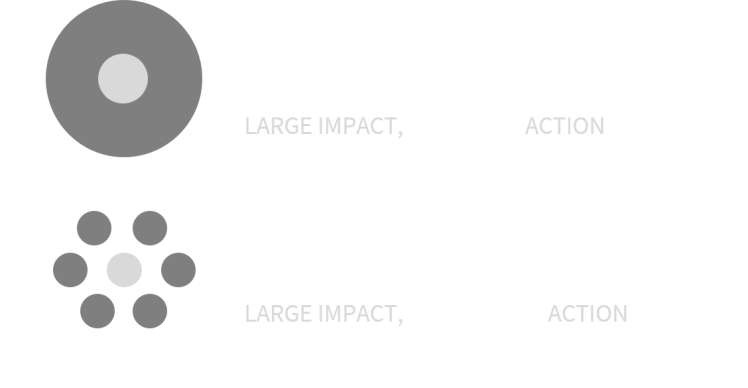
LISAs and LIRAs are actionable strategies that will be scalable and/or replicable. The monitoring of these ACTIONS, will help defining success of the voluntarily generated “COMMITMENT”.
With PLANNING2050, a governmental entity will have access to this database. PLANNING2050 will serve communities in finding the appropriate combination(s) of actions to plan for climate change, social equity, and resilience.
 THE PLANNING CHALLENGE